
Hybrid Cloud in 2026
Fewer Tools, Stronger Opinions
Published
•2 min read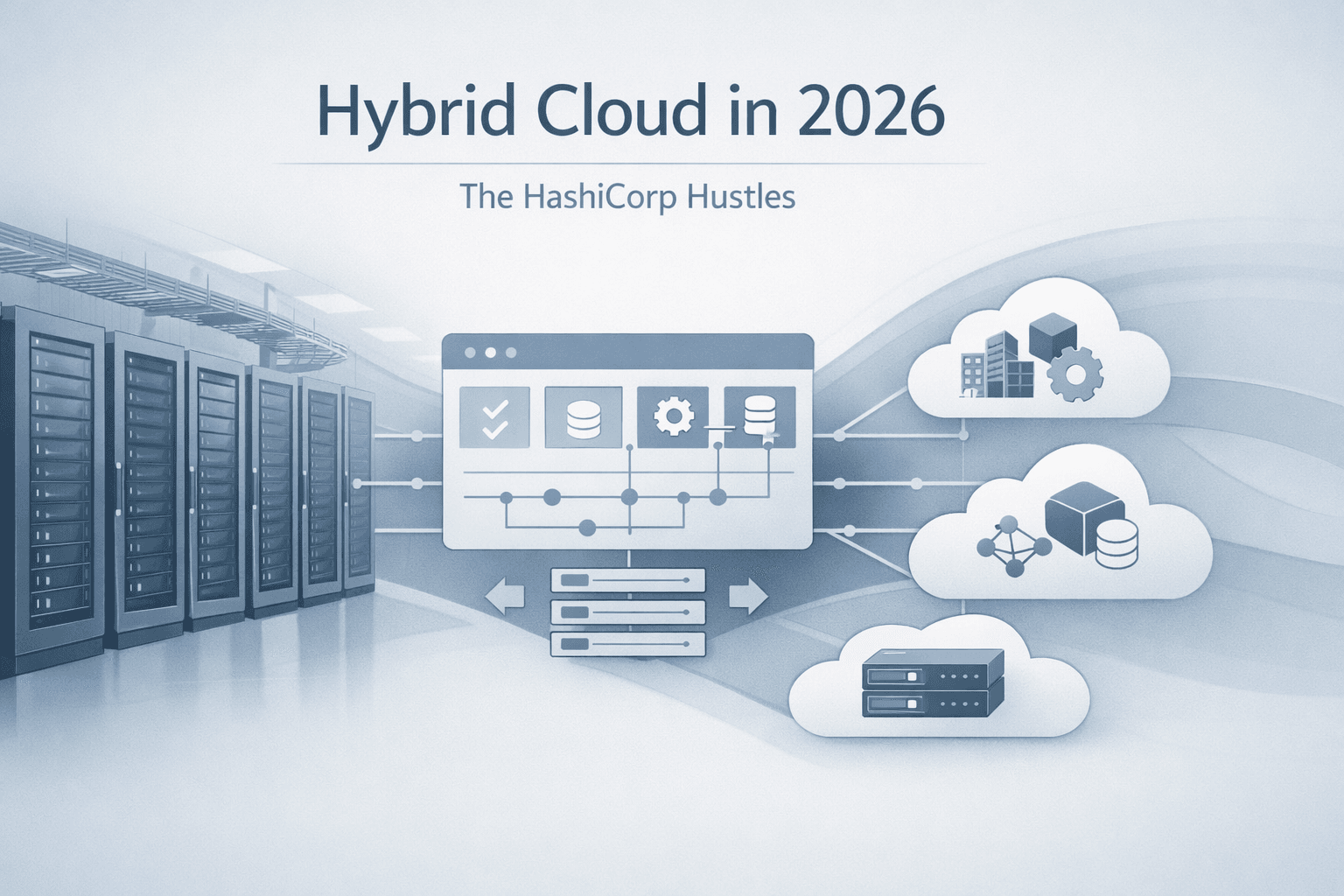
Hybrid cloud used to be a strategy.
Now it’s a consequence.
Most organizations didn’t choose hybrid. They accumulated it.
What Hybrid Cloud Actually Looks Like in 2026
From recent platform reviews:
- One cloud for legacy workloads
- One cloud for growth
- On‑prem still powering something “too risky to move”
The problem isn’t diversity.
It’s inconsistency.
Real Story: Three Clouds, Zero Confidence
One enterprise ran the same application across:
- AWS
- Azure
- On‑prem Kubernetes
Each environment had:
- Different provisioning logic
- Different secrets handling
- Different access models
Incidents weren’t rare. They were expected.
The Shift Nobody Talks About
Hybrid cloud is no longer about choice.
It’s about opinionated standards.
Teams that succeeded standardized:
- Provisioning (one IaC approach)
- Identity (one trust model)
- Policy (one enforcement layer)
Not because it was elegant — because humans needed limits.
Example: Standardizing Provisioning
module "environment" {
  source = "./modules/environment"

  region = var.region
  cloud  = var.cloud
  env    = var.env
}
Same module. Different targets. Predictable behavior.
Why Fewer Tools Win
Every additional tool increases:
- Cognitive load
- Failure modes
- On-call stress
Hybrid cloud works when:
- Differences are abstracted
- Intent stays visible
Closing Thought
Hybrid cloud won’t fail technically.
It fails when humans stop understanding it.
2026 belongs to the teams that simplify ruthlessly.